A Traditional Chinese Medicine approach to relieve TMJ tension using Kudzu (ge gen) Root.
Written by Jade Health Acupuncture
The Foot Yangming Stomach Channel passes through the head and face region — beginning beside the ala of the nose, ascending to the inner canthus of the eye where it meets the Bladder channel; then it descends to enter the upper gum, circles around the lips, and meets the Ren channel at Chengjiang (Ren24). It continues along the lower jaw to Daying (ST5) and Jiache (ST6), ascends to Xiaguan (ST7), passes in front of the ear, and rises to the temporal region.
足陽明胃經循行於頭面部——起於鼻翼旁,上行至目內眥與足太陽膀胱經相交;下行入上齦、環繞口唇,於承漿交會任脈;沿下頜至大迎(ST5)、頰車(ST6),上至下關(ST7),經顴弓之前,過耳前,上行至顳部。
This means that the entire temporomandibular joint area — including the masseter, jaw, and zygomatic regions — lies within the pathway of the Stomach meridian. When qi and blood circulation along this meridian become obstructed, or when external factors such as wind, cold, or dampness invade, it can result in:
- Jaw stiffness and tightness of the masseter muscle
- Pain or clicking during mouth opening
- Radiating discomfort toward the ear
The Foot Yangming Stomach Channel contains abundant qi and blood, which nourish the facial muscles and support jaw mobility. When the Yangming circulation flows freely, the muscles of the face and jaw remain soft and flexible. However, when stagnation, cold, or dampness obstruct the pathway, tightness, pain, and restricted movement of the TMJ often occur.

Because kudzu root (Pueraria lobata) belongs to the Stomach meridian, it helps to activate the Yangming qi flow and relax the muscles. By promoting smooth circulation of qi and blood along the Yangming pathway, kudzu can release tension in the facial and neck regions, thereby relieving TMJ tightness and chewing pain associated with Stomach meridian stagnation.
整個顳顎關節區域——包括咬肌、下頜及顴骨區——皆屬於胃經循行的範圍。當此經的氣血運行受阻,或外感風、寒、濕等邪氣侵襲時,可能出現下列症狀:
- 下頜僵硬、咬肌緊張
- 張口時疼痛或有彈響聲
- 疼痛牽引至耳部
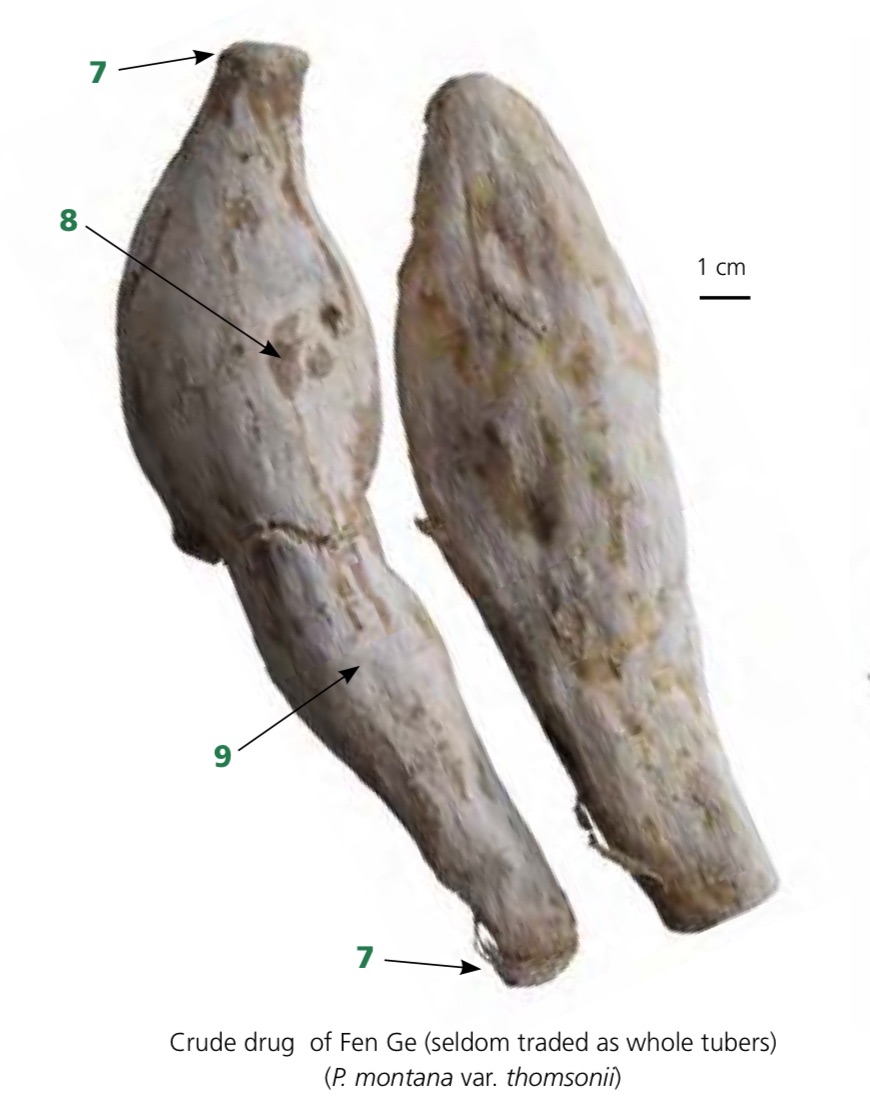
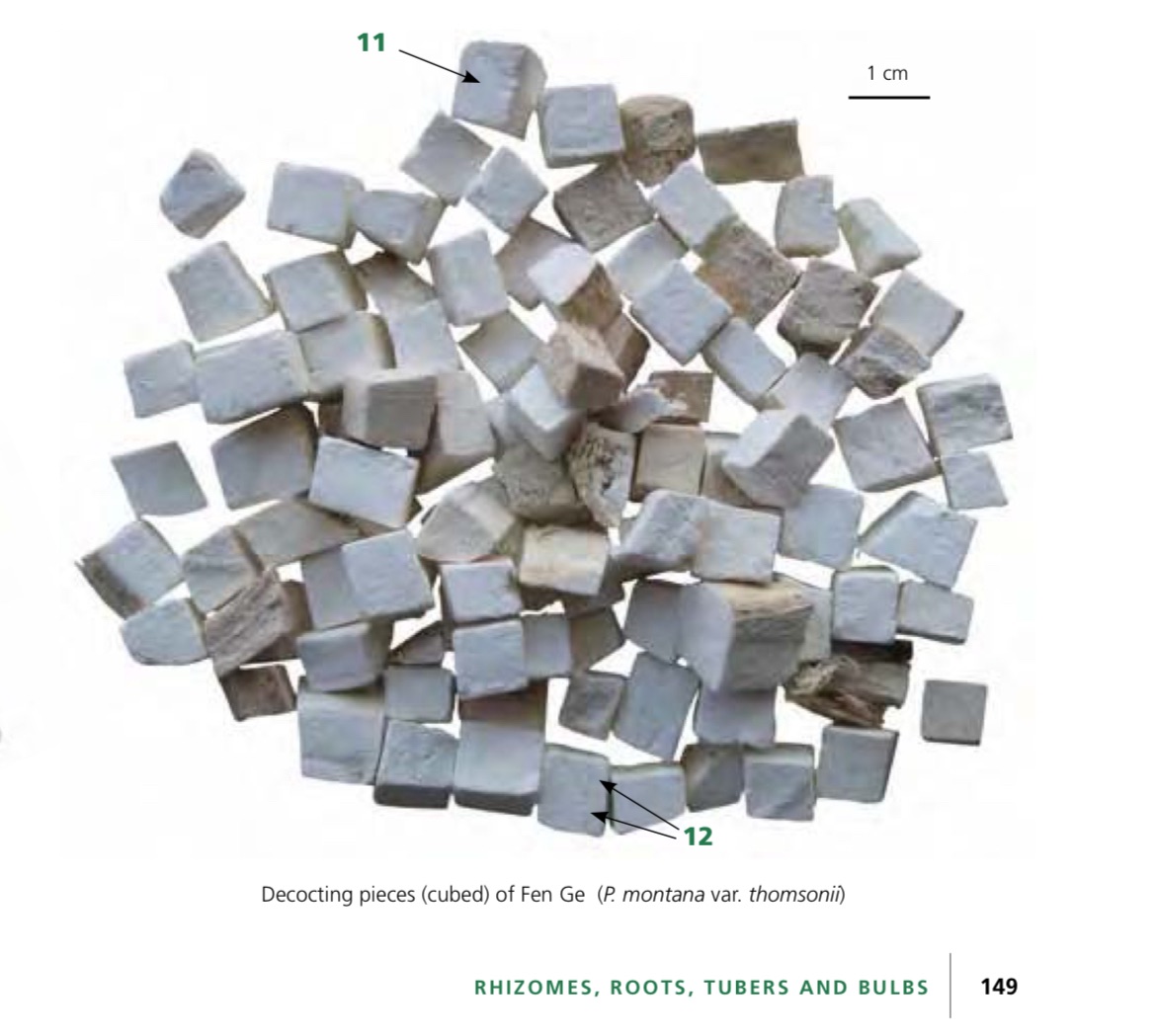
足陽明胃經氣血最為充盛,能滋養面部肌肉並維持下頜關節的活動功能。當陽明經氣血流通順暢時,面部與下頜肌肉柔軟有力、開合自如;若氣滯、血瘀或寒濕阻滯經脈,則易出現顳顎肌群緊繃、疼痛及活動受限。
由於葛根(Pueraria lobata)歸屬於胃經,能通達陽明之氣、舒筋解肌。透過促進陽明經氣血運行,葛根可有效放鬆面部與頸項肌肉的緊張,從而緩解因胃經氣滯所致的顳顎關節緊繃與咀嚼疼痛。
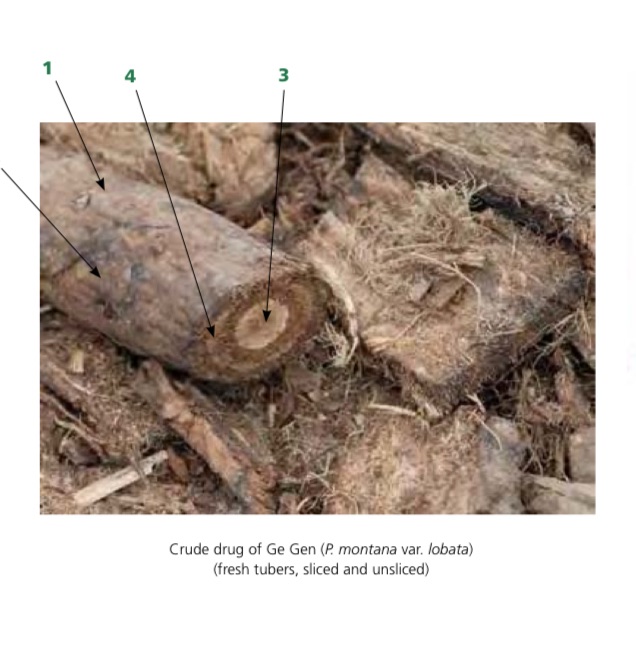
Herbal Effects|藥理與功效
Kudzu root contains the flavonoid compound puerarin, which promotes vasodilation and reduces inflammation. It is especially beneficial for TMJ cases caused by neck or jaw tension, improving local circulation and relieving stiffness.
葛根中的主要成分葛根素(Puerarin)能擴張血管、改善頭頸部循環、減輕肌肉緊張與炎症,對肌肉僵硬、氣血不暢所致的顳顎關節疼痛有輔助效果。
Herbal Combination|方藥配伍
Decoction Example 煎劑範例:
- 葛根 Kudzu root 10 g
- 川芎 Chuanxiong rhizome 5 g
- 白芷 Angelica dahurica root 5 g
- 羌活 Notopterygium root 5 g
- 甘草 Licorice root 2 g
Boil with about 600 mL of water until ~250 mL remains. Take warm twice daily.
水約 600 mL 煎至 250 mL 左右,溫服早晚各一次,可舒筋通絡、改善顳頜循環、緩解疼痛。
Cautions|注意事項
- Yin-deficiency or fatigue-type TMJ: may not respond to kudzu alone; combine with Shu Di Huang or Gou Qi Zi.
陰虛或勞倦型:單用葛根效果有限,可配熟地、枸杞等滋補藥。 - Concurrent antihypertensive use: consult a practitioner, as kudzu may mildly lower blood pressure.
合併服降壓藥:使用前請諮詢醫師,因葛根具輕度降壓作用。
Effects on Blood Pressure|葛根對血壓的影響
Kudzu root has a bidirectional regulatory effect on blood pressure: it may help lower elevated pressure via vasodilation in hypertensive patients, yet excessive use or low baseline pressure may cause compensatory tachycardia with transient rise.
葛根 對血壓具有雙向調節作用:對高血壓者可助擴張血管、降低血壓;對低血壓或過量使用時,可能因過度擴張而致心率代償性加快、血壓短暫升高。
Note on Compensatory Tachycardia|代償性心率加快
When blood pressure drops due to excessive vasodilation, the heart speeds up to maintain circulation—a normal physiological response. Common signs include transient heartbeat acceleration, mild dizziness, or palpitations.
當血壓因血管過度擴張暫時下降時,身體會自動加快心跳以維持循環;常見表現為短暫心跳加快、輕微頭暈或心悸,通常屬暫時現象。
Usage Recommendations|使用建議
- Dosage control: do not exceed 10 g dried root daily; avoid long-term or excessive use.
劑量控制:每日乾品不超過 10 克,避免長期大量服用。 - For patients with high or low blood pressure: follow professional guidance and monitor blood pressure regularly.
高或低血壓者:應遵醫指導並定期監測血壓。 - Special populations: pregnant or breastfeeding women, post-surgical patients, and those with spleen–stomach deficiency or cold constitution should use cautiously.
特殊人群:孕婦、哺乳期、術後及脾胃虛寒者慎用。 - Medical supervision: those taking cardiovascular drugs should consult a doctor to avoid interference with treatment.
醫學指導:正服心血管藥者須諮詢醫師,避免影響療程。 - Avoid cold drinks and excessive chewing during treatment.
治療期間避免冰冷飲品與過度咀嚼,以免肌肉緊張、加重顳顎負擔。
Summary|總結
Kudzu root offers a gentle yet effective adjunct for TMJ tension-type disorders. It relaxes muscles, promotes circulation, and complements acupuncture to restore comfortable jaw movement.
葛根 能柔和地舒筋通絡、促進氣血循環,配合針灸與熱敷可加速恢復,使下頜放鬆、頭頸輕鬆、重拾自然微笑。
Pictures from: CHINESE MEDICINAL PLANTS, HERBAL DRUGS AND SUBSTITUTES — An Identification Guide
Christine Leon and Lin Yu-Lin
 Jade Health Acupuncture
Leave a comment